
Pollination and reproductive biology of thirteen species of Begonia in the Serra do Mar State Park, São Paulo, Brazil
DOI:
https://doi.org/10.26786/1920-7603(2011)16Abstract
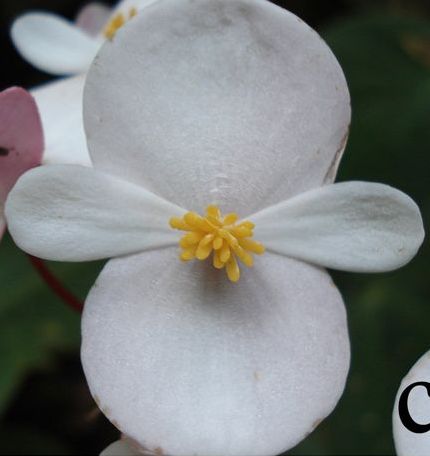
The reproductive biology of 13 monoecious species of Begonia that occur in the Serra do Mar State Park, São Paulo, Brazil, was investigated. These species flower annually and present flowers with mostly white tepals, sweet odour, pollen as a reward but no nectar, numerous yellow stamens, and yellow styles. Anthesis is diurnal and floral duration is long (6 - 15 days). The unusual appearance of pistillate flowers of these species supports the view that they are intersexual mimics of the staminate flowers. Despite consistently high levels of fruit-set, none of the 11 species tested proved to be apomictic. In contrast to earlier reports of self-compatibility in Begonia, self-pollinations of B. integerrima and B. itatinensis produced no fruits or seeds, and the complete absence of pollen tubes in the styles of self-pollinated flowers of B. integerrima suggests that the species is self-incompatible. Flowers pollinated under natural conditions showed many pollen tubes that reached ovules, suggesting that adequate numbers of compatible pollen grains had been transported by pollinators. The principal pollinators were bees of the Apidae and Halictidae. Ten species of bees were observed to visit eight species of Begonia, and pollen collection occurred by vibration, except for Trigona spinipes. Visits to rewarding staminate flowers were significantly more frequent than visits to unrewarding pistillate flowers. Duration of visits to pistillate flowers also was significantly shorter than the duration of visits to staminate flowers. We conclude that visits to pistillate flowers occur by mistake but with sufficient frequency to allow for successful reproduction in natural populations of these species.
References
Ågren J, Schemske DW (1991) Pollination by deceit in a neotropical monoecious herb. Begonia involucrata. Biotropica 23: 235-241.
Ågren J, Schemske DW (1993) Outcrossing rate and inbreeding depression in two annual monoecious herbs, Begonia hirsuta and B. semiovata. Evolution 47: 125-135.
Alves dos Santos I (2003) Comunidade, conservação e manejo: o caso dos polinizadores. Revista de Tecnologia e Ambiente 8: 35-57.
Armstrong JE, Drummond III BA (1986) Floral biology of Myristica fragrans Houtt. (Myristicaceae), the nutmeg of commerce. Biotropica 18: 32-38.
Baker HG (1976) “Mistake” pollination as a reproductive system with special reference to the Caricaceae. In: Burley J, Styles BT (eds) Tropical Trees: Variation, Breeding, and Conservation, Academic Press, New York, pp 161-169.
Burt-Utley K (1985) A revision of Central American species of Begonia, section Gireoudia (Begoniaceae). Tulane Studies in Zoology and Botany 25: 1-131.
Castillo RA, Cordero C, Domínguez CA (2002) Are reward polymorphisms subject to frequency- and density-dependent selection? Evidence from a monoecious species pollinated by deceit. Journal of Evolutionary Biology 15: 544 -552.
Clement WL, Tebbitt MC, Forrest LL, Blair JE, Brouillet L, Eriksson T, Swensen SM (2004) Phylogenetic position and biogeography of Hillebrandia sandwicensis (Begoniaceae): A rare Hawaiian relict. American Journal of Botany 91: 905- 917.
Corff JL, Ågren J, Schemske DW (1998) Floral display, pollinator discrimination, and female reproductive success in two monoecious Begonia species. Ecology 79: 1610-1619.
Cozzolino S, Widmer A (2005) Orchid diversity: an evolutionary consequence of deception? Trends in Ecology and Evolution 20: 487-494.
Dafni A (1992) Pollination ecology: a practical approach. Oxford: IRL Press.
Doorenbos J, Sosef SM, de Wilde JJFE (1998) The sections of Begonia, including descriptions, keys and species lists (Studies in Begoniaceae VI). Wageningen Agricultural University Papers 98: 1–266.
East EM (1940) The distribution of self-sterility in flowering plants. Proc Amer Phil Soc 82: 449-518.
Faegri K, van der Pijl L (1979) The principles of pollination ecology, 3rd rev edn Oxford: Pergamon Press
Forrest LL, Hollingsworth PM (2003) A recircumscription of Begonia based on nuclear ribosomal sequences. Plant Systematics and Evolution 241: 193-211.
Forrest LL, Huges M, Hollingsworth PM (2005) A phylogeny of Begonia using nuclear ribosomal sequence data and morphological characters. Systematic Botany 30: 671-682.
Givnish T (1980) Ecological constraints on the evolution of breeding systems in seed plants: dioecy and dispersal in gymnosperms. Evolution 34: 959-972.
Goodall-Copestake WP, Harris DJ, Hollingsworth PM (2009) The origin of a mega-diverse genus: dating Begonia (Begoniaceae) using alternative datasets, calibrations and relaxed clock methods. Botanical Journal of the Linnean Society 159: 363-380.
Haber WA (1984) Pollination by deceit in a mass-flowering tropical tree Plumeria rubra L. (Apocynaceae). Biotropica 16: 269-275.
House SM (1989) Pollen movement to flowering canopies of pistillate individuals of three rainforest tree species in tropical Australia. Australian Journal of Ecology 14: 77-94.
Jacques EL (2002) Estudos taxonômicas das espécies brasileiras do gênero Begonia L. (Begoniaceae) com placenta partida. Boletim Botânica da Universidade de São Paulo.
Kearns C, Inouye DW (1993) Techniques for pollination biologists. University Press of Colorado, Niwot.
Kearns CA, Inouye DW, Waser NM (1998) Endangered mutualisms: the conservation of plant-pollinator interactions. Ann Rev Ecol and Syst 29: 83-112.
Köppen W (1948) Climatologia: con un estudio de los climas de la tierra. México: Fondo de Cultura Económica.
Martin FW (1959) Staining and observing pollen tubes in the style by means of fluorescence. Stain Technol. 34: 125 128.
Menzel R (2001) Behavioral and neural mechanisms of learning and memory as determinants of flower constancy. In: Chittka L, Thomson JD (eds) Cognitive ecology of pollination. Cambridge University Press, Cambridge, pp 21-40.
Newstrom LE, Frankie GW, Baker HG (1994) A new classification for plant phenology based on flowering patterns in lowland tropical rain forest trees at La Selva, Costa Rica. Biotropica 26: 141-159.
Nieh JC, Roubik DW (1995) A stingless bee (Melipona panamica) indicates food location without using a scent trail. Behavioral Ecology and Sociobiology 37: 63-70.
Nimer E (1977) Clima. In Geografia do Brasil - Região Sudeste. IBGE. 3: 51-89.
Pansarin LM, Pansarin ER, Sazima M (2008) Reproductive biology of Cyrtopodium polyphyllum (Orchidaceae): a Cyrtopodiinae pollinated by deceit. Plant Biology 10: 650-659.
Radford AE, Dickison WC, Massey JR, Bell CR (1974) Vascular plant systematics. New York, Harper and Row.
Ramalho M (2004) Stingless bees and mass flowering trees in the canopy of Atlantic Rainforest: a tight relationship. Acta Botânica Brasileira 18: 37-47.
Renner SS, Feil JP (1993) Pollinators of tropical dioecious angiosperms.
American Journal of Botany 80: 1100-1107.
Roubik DW (1989) Ecology and natural history of tropical bees. Cambridge University Press, New York.
Schemske DW, Ågren J (1995) Deceit pollination and selection on female flower size in Begonia involucrata: an experimental approach. Evolution 49: 207-214.
Schemske DW, Ågren J, Le Corff J (1995) Deceit pollination in the monoecious, neotropical herb Begonia oaxacana (Begoniaceae). In: Lloyd DG, Barrett SCH (eds) Floral biology studies on floral evolution in animal-pollinated plants. New York, Chapman and Hall, 292-318.
Seitner PG (1976) The role of insects in Begonia pollination. The Begonian 43: 147-153.
Setzer J (1966) Atlas climático e ecológico do Estado de São Paulo. Comissão Interestadual da Bacia Paraná-Uruguai, São Paulo.
Silva SJG, Mamede MCH (2001) Begoniaceae da Mata Atlântica na Serra do Mar do Estado de São Paulo, Brasil. Boletim do Instituto de Botânica 15: 1-61.
Sprengel CK (1793) Das Entdeckte Geheimniss der Natur im Bau und in der Befruchtung der Blumen. Vieweg, Berlin.
Vogel S (1978) Evolutionary shifts from reward to deception in pollen flowers. In: Richards AJ (ed) The pollination of flowers by insects. Academic Press, London, pp 89-96.
Vogel S (1998) Remarkable nectaries: structure, ecology, organophyletic perspectives IV. Miscellaneous cases. Flora 193: 225-248.
Waser NM (1983) Competition for pollination and floral character differences among sympatric plant species: a review of evidence. In: Jones CE, Little RJ (eds) Handbook of experimental pollination ecology. Van Nostrand Reinhold, New York, pp 277-293.
Wiens D (1978) Mimicry in plants. In: Hecht MK, Steere WC, Wallace B (eds) Evolutionary Biology. New York, Plenum Press, pp 365-403.
Downloads
Published
How to Cite
Issue
Section
License
Copyright (c) 2011 Graham Edward Wyatt, Marlies Sazima

This work is licensed under a Creative Commons Attribution 4.0 International License.